Conference, Lab Updates

BID4R Lab at the 2024 ASEE Conference

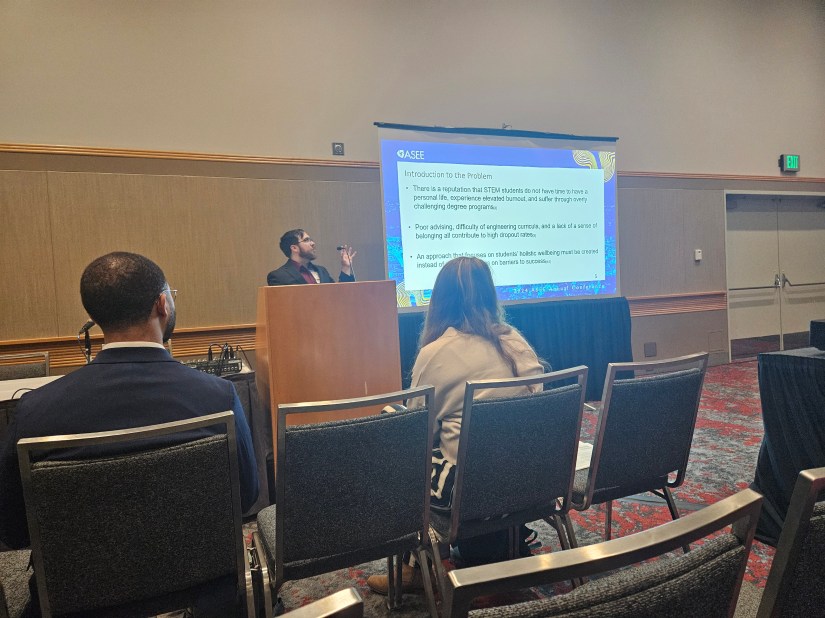
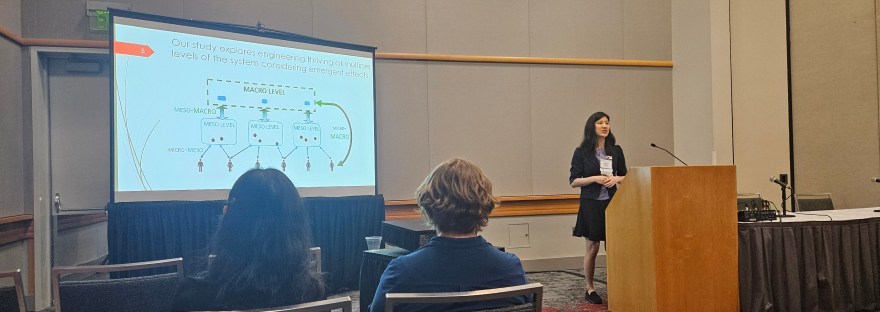
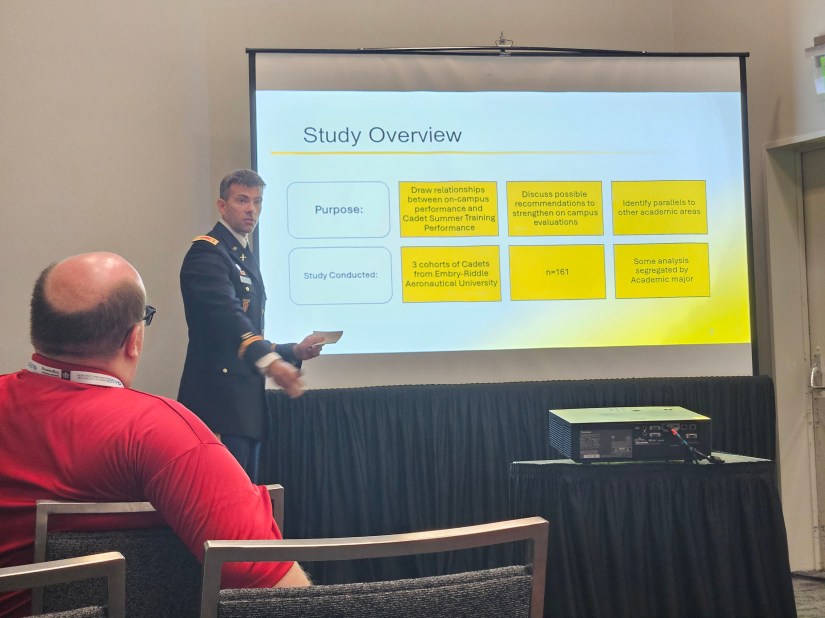
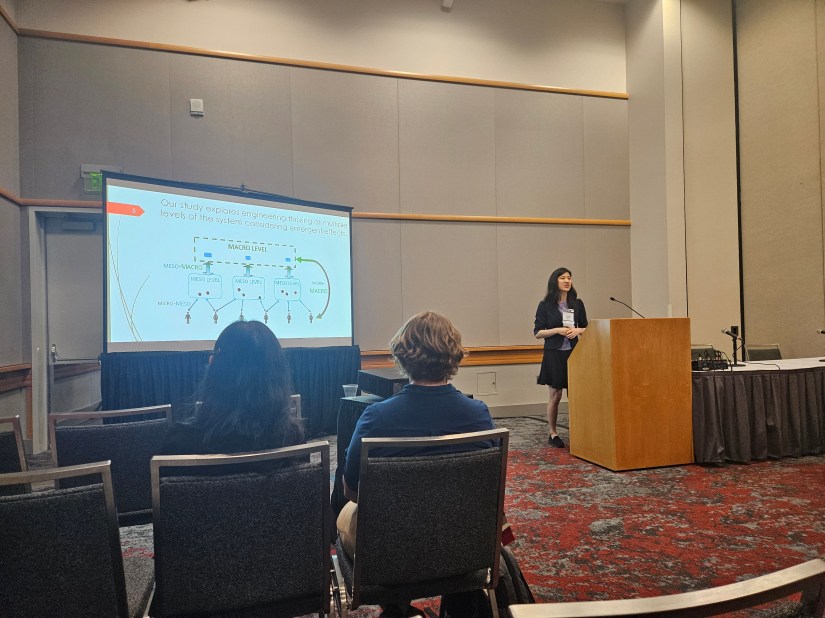
June 26, 2024 – ERAU’s BID4R Lab had a great turnout at the 2024 ASEE Annual Conference, held in Portland, Oregon. Master of Science in Systems Engineering (MSSYS) alumni Major Jason Newell and Mr. Benjamin E. Chaback both presented conference talks on their papers developed while in the masters program at ERAU under the guidance of Dr. Bryan Watson. BID4R postdoc Dr. Julianna Gesun also presented a conference talk regarding work coauthored with student Rachel Swan and Dr. Bryan Watson. Overall, the 2024 ASEE Annual Conference served as a great networking opportunity for the BID4R attendees with the Military and Veterans Division, the Systems Engineering Division, Student Division, Liberal Education/Engineering & Society Division, and Educational Research Methods Division.
Link to papers presented at the conference:

Conference, Lab Updates

BID4R Lab at CSER 2024

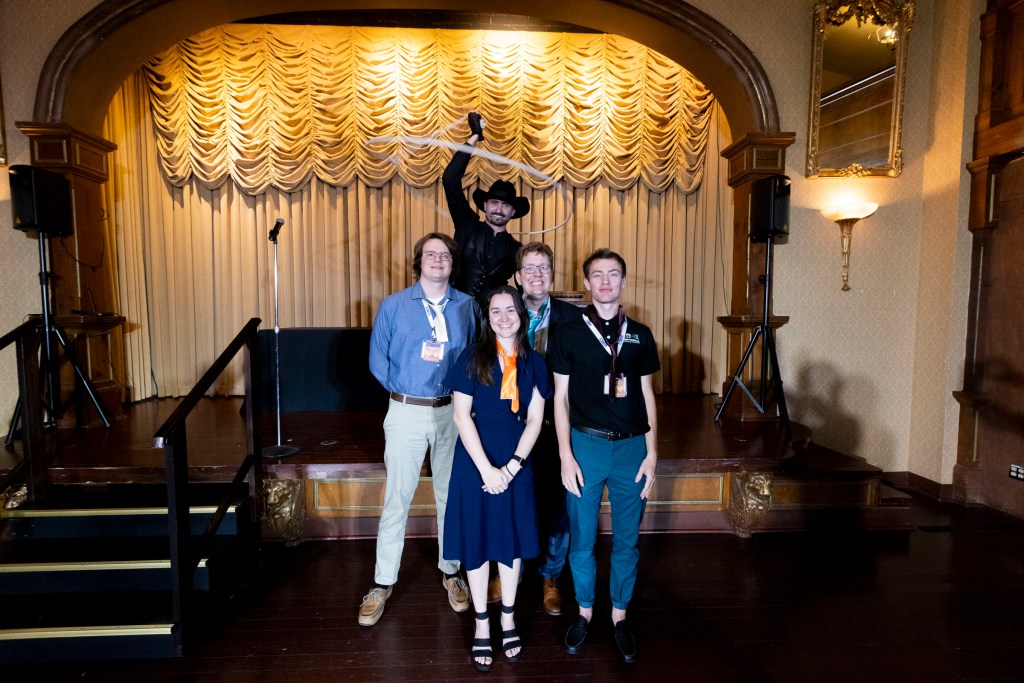
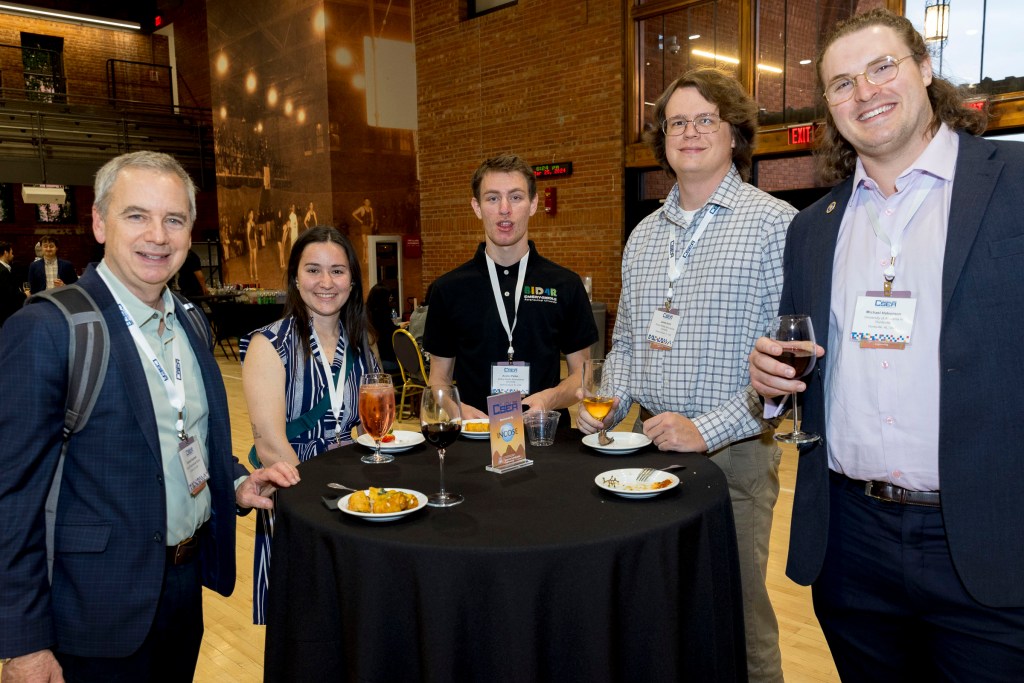
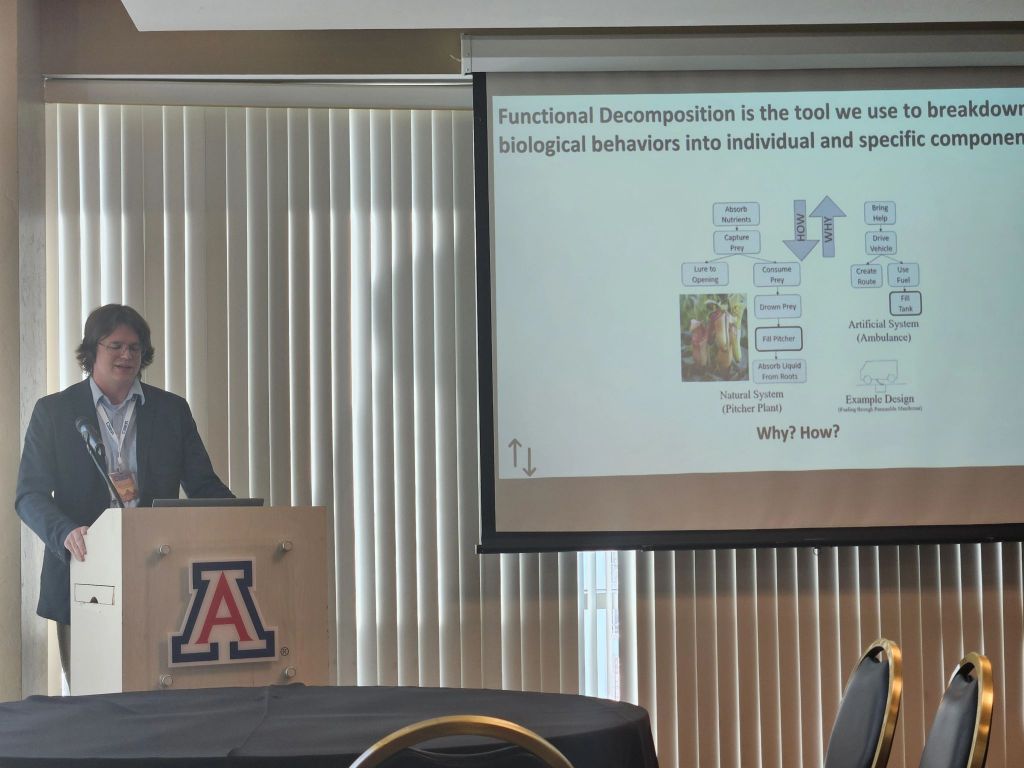
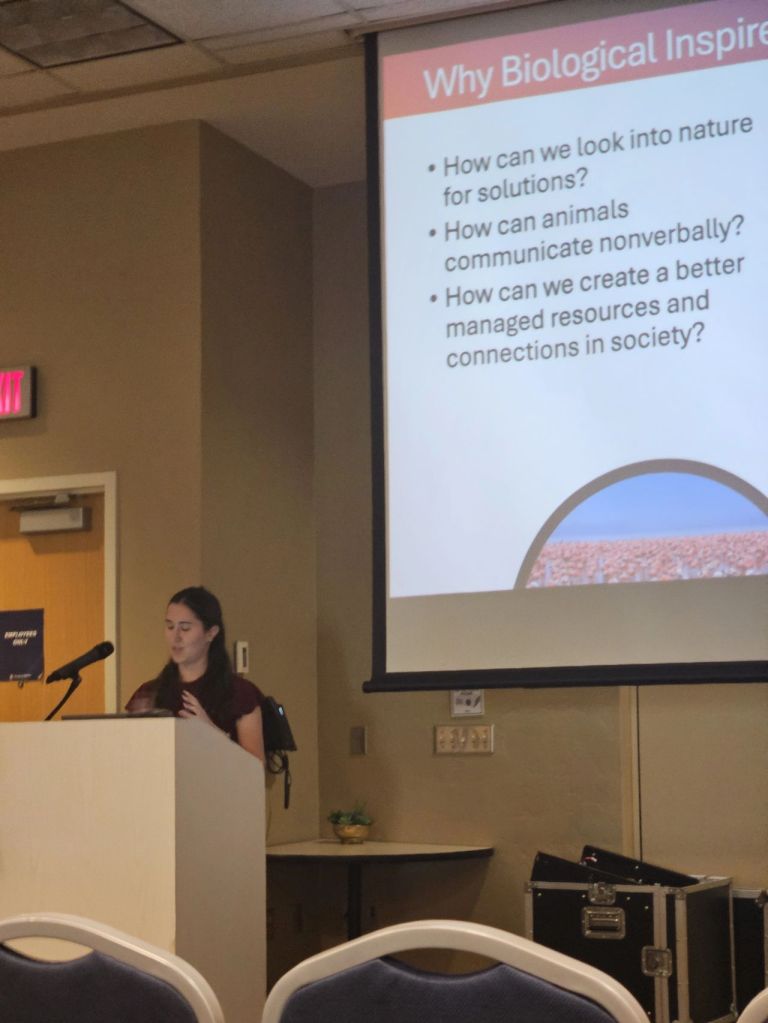
March 27, 2024 – Members of the BID4R Lab presented at the Conference on Systems Engineering Research (CSER) 2024 from March 25-27 at the University of Arizona in Tucson, Arizona.

Below are the title of the papers that are presented by the members of BID4R Lab at CSER 2024:

  • A New Multi-Agent System Consensus Algorithm Inspired by Synchronous Turtle Hatching Behavior – Austen Pallen, Dr. Bryan Watson
  • A Functional Decomposition Summarizing Eusocial Insect Parasite Resistance: A Tool for Biologically Inspired Design – James Hand, Dr. Bryan Watson
  • A New Biological Inspired Resource Allocation Algorithm for Distributed Multi Agent Systems with Limited Knowledge – Julia Gorthey, Fayruz Maysha, Dr. Bryan Watson

Well done Austen Pallen, James Hand, and Julia Gorthey on the well-written paper and great presentations! Big thank you to our mentor, Dr. Bryan Watson! We are extremely proud of their achievements!

Conference, Lab Updates

BID4R Lab at CSER 2023

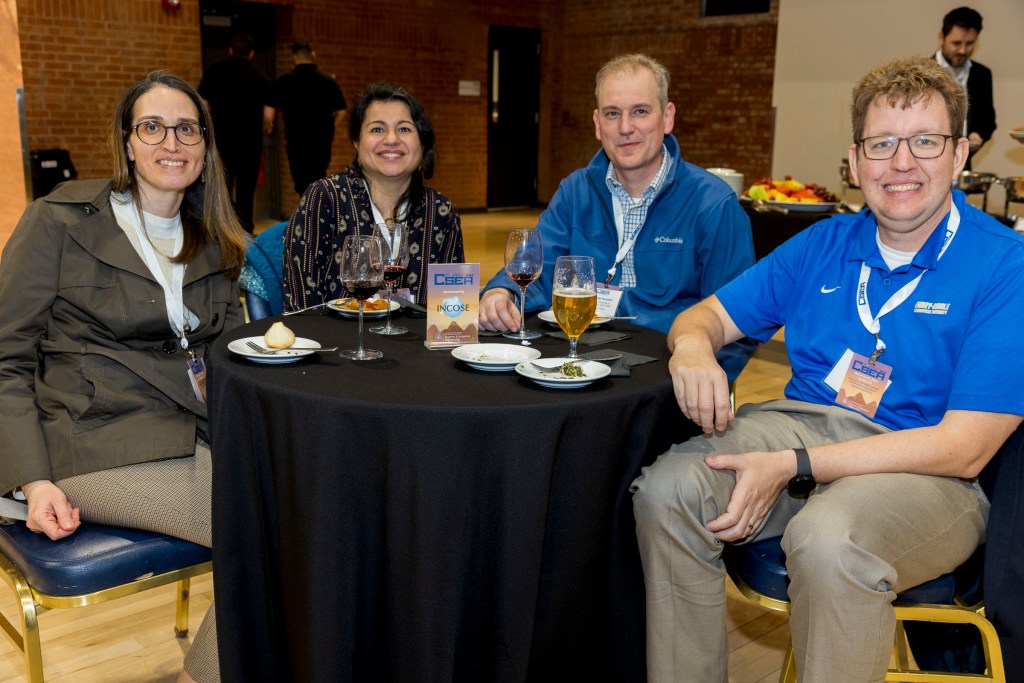
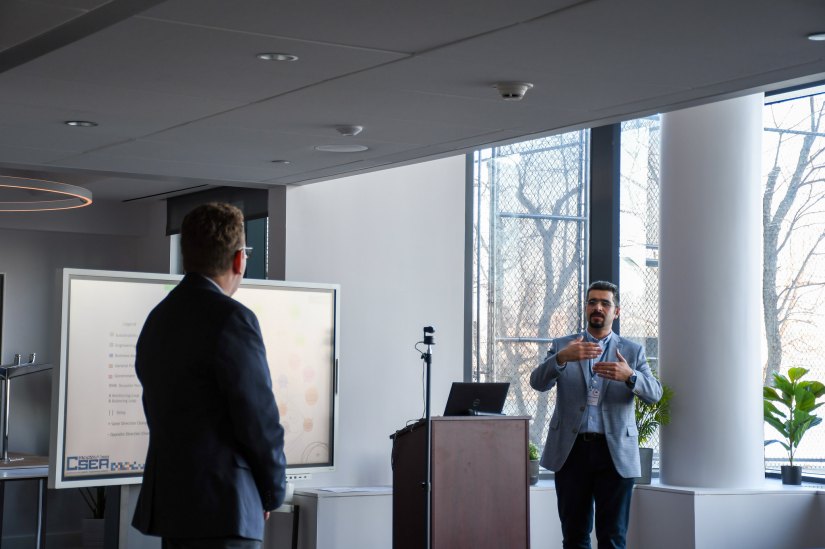
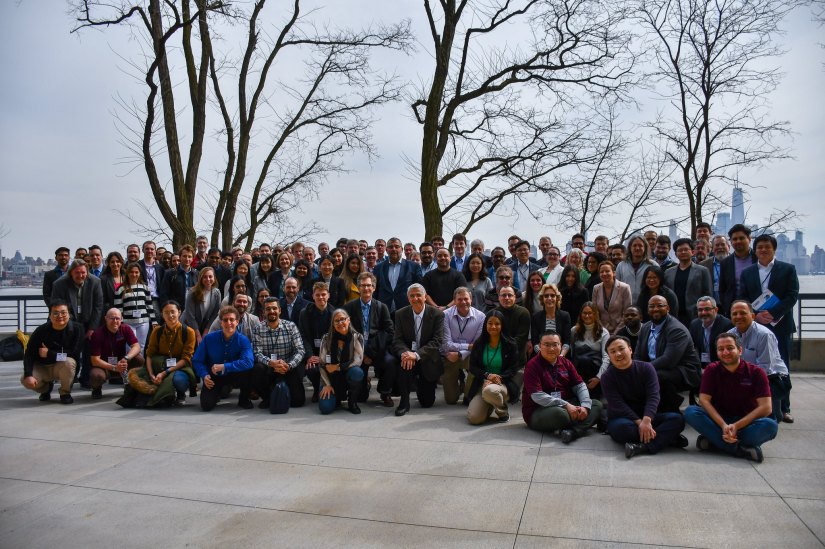
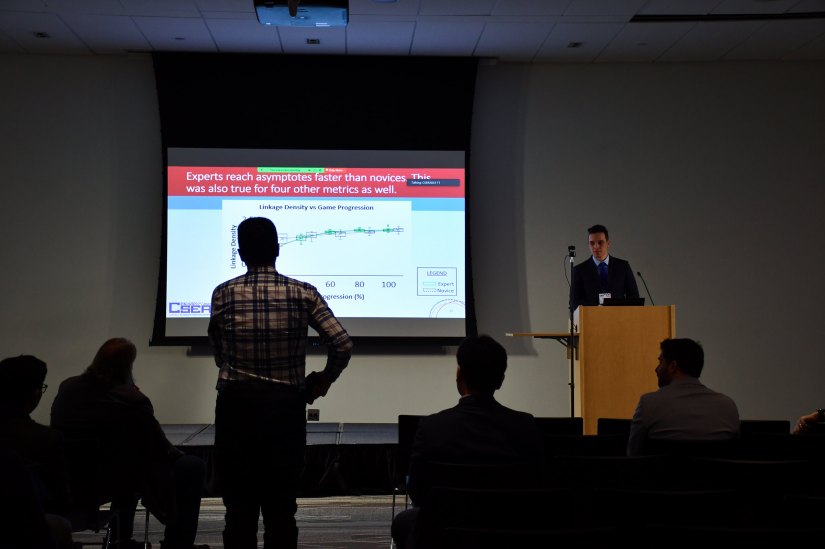
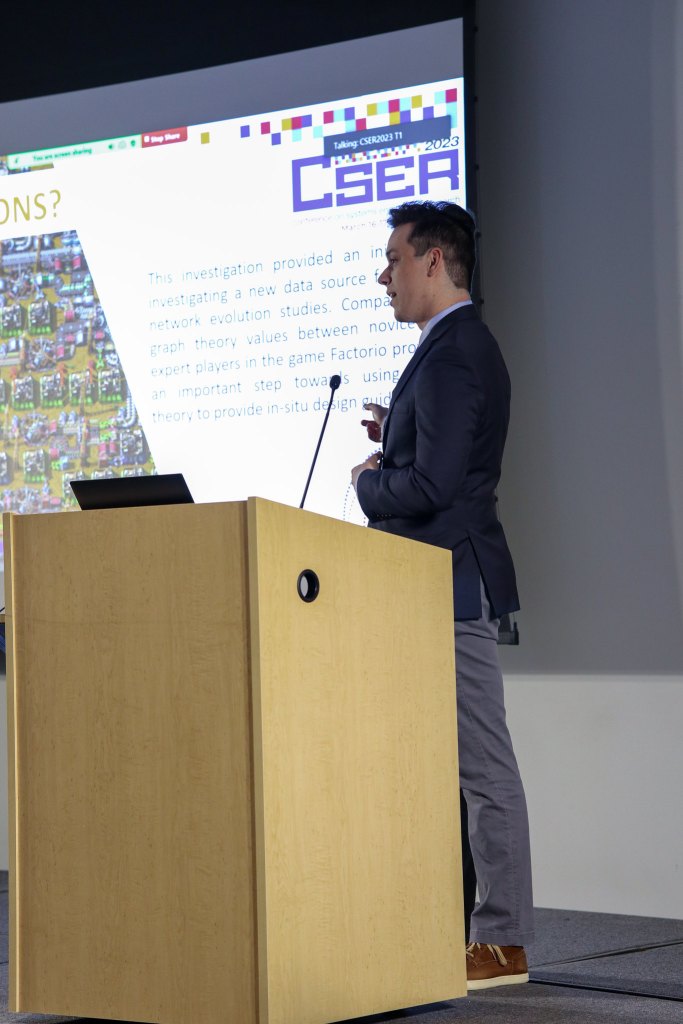
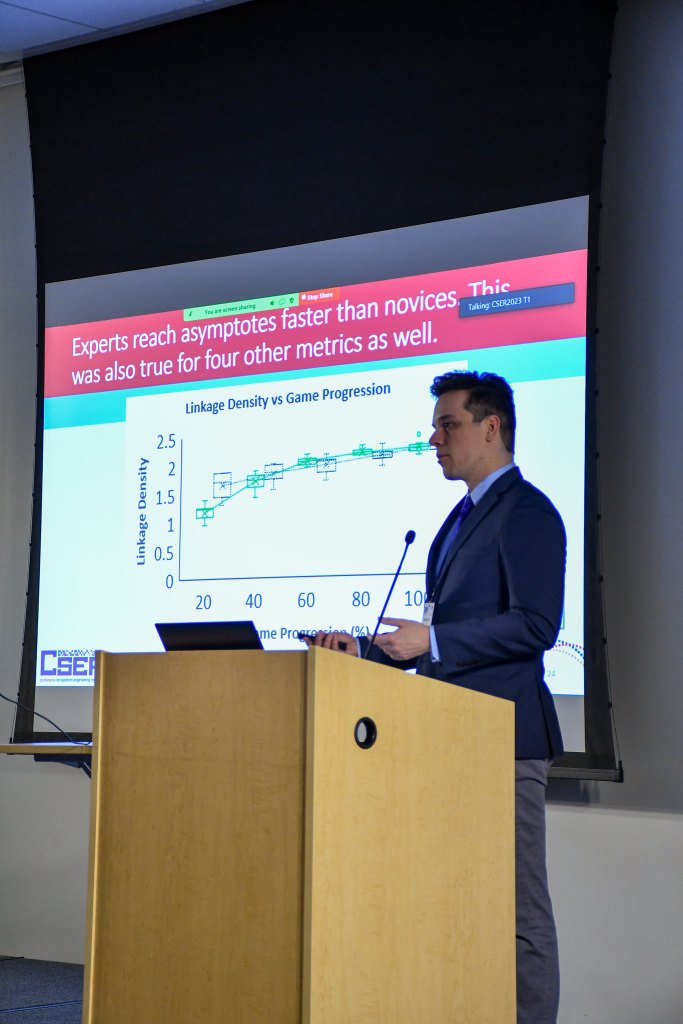
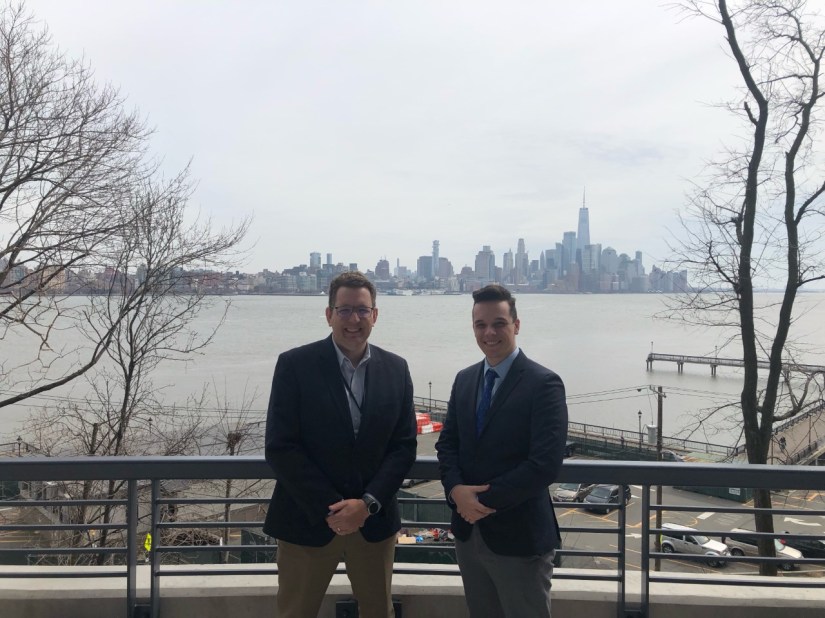
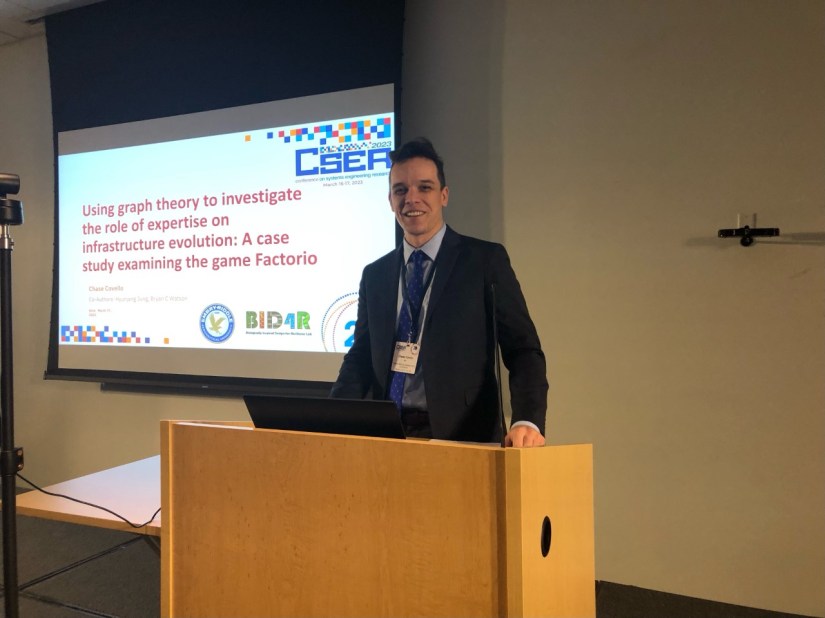
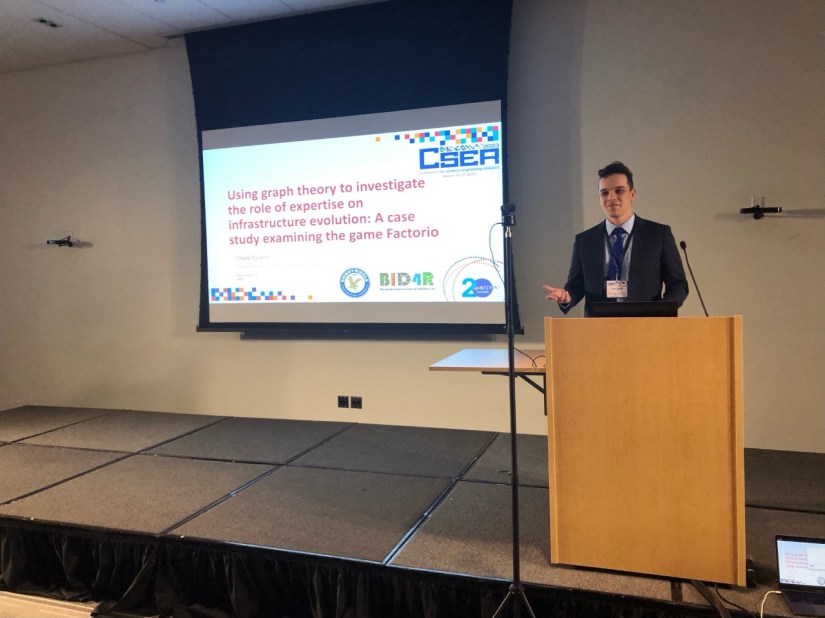
Members of the BID4R Lab at the Conference on Systems Engineering Research (CSER) at the Stevens Institute of Technology. Chase Covello presented his paper: “Using Graph Theory to Investigate the Role of Expertise on Infrastructure Evolution: A Case Study Examining the game Factorio” to a well attended session. 

In his paper, Chase and Henry focused on how research into critical infrastructure network architecture design faces two significant challenges. First, real-world network performance data is often not available due to being proprietary. Secondly, many efforts focus on analysing the structure of an infrastructure network at a single point in time, while real-world networks are constantly evolving. In this article, these two gaps (need for more data and for time-series data) are examined by utilizing a new data source: the video game Factorio. Factorio is a manufacturing simulator. Utilizing publicly available recordings of players’ networks in game, a shared end point, and completion time stamps allows the examination of different network strategies. The key research question examined in this work is how does network evolution change when comparing ten expert and ten novice designers. This article provides two key contributions. First, a qualitative and quantitative analysis of how ten different structural graph theory metrics evolve when comparing expert and novice designers is provided. The expert dataset has a narrower distribution, indicating common strategies, and focuses on critical path manufacturing early in the network’s evolution. The second contribution is a set of time-series network data that can be used for additional studies. By examining the differences in network evolution between experts and novices, this article performs a critical first step towards using in-situ graph theory metrics as a decision aid for designers during infrastructure evolution.